

Early-Career Researchers Discuss Cooperation between Russia and Arab States
.jpeg "Early-Career Researchers Discuss Cooperation between Russia and Arab States")
HSE University has hosted a conference entitled ‘Russia—The Arab World: Digital Future and Youth Cooperation,’ organised by the Faculty of World Economy and International Affairs (WEIA). The meeting took place in the run-up to the first Russian–Arab summit, due to be held in Moscow on October 15, 2025.

Anastasia Likhacheva
‘I am very pleased that the conference brings together both Russian students studying Arabic and students from Arab countries who are interested in developing cooperation in Russia and across the Arab world. Communicate, make connections, debate, ask questions. After all, in five, ten, or fifteen years it will be you who have to answer them,’ said Anastasia Likhacheva, Dean of WEIA, addressing the audience. She expressed the hope that the most interesting ideas and proposals would be communicated to the official representatives of the countries.
Dmitry Efremenko, Head of the School of International Regional Studies at WEIA, stressed the importance of the event, describing it as unprecedented. Firstly, this was the first conference of early-career Arabists to be held in the Arabic language. This, he noted, creates a more trusting atmosphere that helps consolidate the research community.
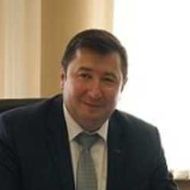
Dmitry Efremenko
‘The second distinctive feature of the event is that it coincides with the forthcoming Russia–Arab summit, which I believe will raise cooperation between our countries to a fundamentally new and higher level, opening up fresh prospects for political engagement, economic cooperation, collaboration in technology, and many other fields,’ he said.
According to Dmitry Efremenko, the conference is taking place at a difficult moment both for Russia and for the Arab world. ‘Very complex and contradictory events are unfolding, the consequences of which will, of course, become fully apparent only later. That is all the more reason why, in such circumstances, it is crucial to maintain dialogue and to sustain it on a regular basis across a wide range of channels—from heads of state to the work of early-career researchers. This will make it possible in the future to reach a new level of expert support for political decision-making and for economic cooperation between our countries,’ he observed.
In his view, it is particularly important to discuss such issues as cybersecurity and standards in the digital sphere. Concluding his speech, Dmitry Efremenko expressed the hope that the conference would mark the beginning of a strong and sustainable research community.
New technologies are radically transforming both the world economy and world politics, agreed Moscow State University professor Igor Yaminsky. ‘Digital technologies are advancing at an incredible and rapid pace, one that only the younger generation, with their 96 billion neurons, will be able to keep up with,’ he said.
All countries, including those of the Arab world, are now focused on the development of digital technologies, observed Igor Yaminsky. For instance, Saudi Arabia is creating the city of the future, Neom, where digital technologies will play a leading role. The UAE has a Minister of Artificial Intelligence, while Bahrain, Kuwait, and Egypt are already launching small satellites built utilising digital technologies, he noted. Russia, too, is rapidly advancing in new technologies.
In recent years, relations between Russia and the Arab world have seen positive growth, as evidenced by a whole series of agreements reached in various fields—from the intensification of political, economic and trade cooperation to cultural, educational, scientific and technical, humanitarian and tourism exchanges, noted Walid Hamed Shiltagh, Ambassador of the Arab League to Russia. He expects this positive dynamic to gain fresh momentum thanks to the first Russia–Arab summit. At the same time, cooperation in education has traditionally played an important role in building bridges of communication, Walid Hamed Shiltagh stressed.

Andrey Baklanov
Student and youth cooperation plays a significant role in international politics—indeed, in some countries such movements are regarded with concern, remarked Prof. Andrey Baklanov, Head of the Middle East and North Africa Studies Section at HSE University. He is confident that the scale and significance of such cooperation will only continue to grow.
The conference was attended by students from HSE and other Russian universities. In their presentations, they spoke about youth diplomacy and student collaboration between Russia and Arab states.
See also:

Banking Crises Drive Biodiversity Loss
Economists from HSE University, MGIMO University, and Bocconi University have found that financial crises have a significant negative impact on biodiversity and the environment. This relationship appears to be bi-directional: as global biodiversity declines, the likelihood of new crises increases. The study examines the status of populations encompassing thousands of species worldwide over the past 50 years. The article has been published in Economics Letters, an international journal.
Scientists Discover That the Brain Responds to Others’ Actions as if They Were Its Own
When we watch someone move their finger, our brain doesn’t remain passive. Research conducted by scientists from HSE University and Lausanne University Hospital shows that observing movement activates the motor cortex as if we were performing the action ourselves—while simultaneously ‘silencing’ unnecessary muscles. The findings were published in Scientific Reports.
HSE Scientists Reveal What Drives Public Trust in Science
Researchers at HSE ISSEK have analysed the level of trust in scientific knowledge in Russian society and the factors shaping attitudes and perceptions. It was found that trust in science depends more on everyday experience, social expectations, and the perceived promises of science than on objective knowledge. The article has been published in Universe of Russia.
IDLab: Fascinating Research, Tough Deadlines, and Academic Drive
The International Laboratory of Intangible-driven Economy (IDLab) was established at the HSE campus in Perm 11 years ago. Its expertise in data processing and analysis allows researchers to combine fundamental studies with applied projects, including the development of risk and cybersecurity models for Sber. The head of the laboratory, Professor Petr Parshakov, and Senior Research Fellow Professor Mariya Molodchik spoke to the HSE News Service about IDLab’s work.
HSE Lecturers Awarded Yandex ML Prize 2025
The Yandex ML Prize is awarded to lecturers and heads of educational programmes who contribute to the development of artificial intelligence in Russia. This year, 10 laureates were selected from 300 applicants, including three members of the HSE Faculty of Computer Science (FCS). A special Hall of Fame award was also presented for contributions to the establishment of machine learning as an academic field. One of the recipients was Dmitry Vetrov, Research Professor at the HSE FCS.
HSE Tops Ranking of Universities Participating in Priority 2030 Programme
The Russian Ministry of Science and Higher Education has published an updated list of participants in the Priority 2030 programme. A total of 106 universities will receive support this year. HSE University was included in the first group and topped the ranking.
HSE University and Banking and Finance Academy of Uzbekistan Sign Memorandum on Scientific Cooperation
The partnership aims to foster academic collaboration in the fields of global economics, sustainable development, and Islamic finance. Strengthening academic ties with Uzbekistan represents a promising direction for scientific exchanges and the implementation of international projects in sustainable development.
HSE Scientists Optimise Training of Generative Flow Networks
Researchers at the HSE Faculty of Computer Science have optimised the training method for generative flow neural networks to handle unstructured tasks, which could make the search for new drugs more efficient. The results of their work were presented at ICLR 2025, one of the world’s leading conferences on machine learning. The paper is available at Arxiv.org.
Neural Network Trained to Predict Crises in Russian Stock Market
Economists from HSE University have developed a neural network model that can predict the onset of a short-term stock market crisis with over 83% accuracy, one day in advance. The model performs well even on complex, imbalanced data and incorporates not only economic indicators but also investor sentiment. The paper by Tamara Teplova, Maksim Fayzulin, and Aleksei Kurkin from the Centre for Financial Research and Data Analytics at the HSE Faculty of Economic Sciences has been published in Socio-Economic Planning Sciences.
‘To Help Make the World More Sustainable, Fair, and Humane’
The BRICS International School: New Generation has concluded at HSE University, bringing together more than 100 participants from 38 BRICS and Global South countries. The attendees included early-career researchers, diplomats, entrepreneurs, journalists, and civil society representatives.