


Scientists Test Asymmetry Between Matter and Antimatter
An international team, including scientists from HSE University, has collected and analysed data from dozens of experiments on charm mixing—the process in which an unstable charm meson oscillates between its particle and antiparticle states. These oscillations were observed only four times per thousand decays, fully consistent with the predictions of the Standard Model. This indicates that no signs of new physics have yet been detected in these processes, and if unknown particles do exist, they are likely too heavy to be observed with current equipment. The paper has been published in Physical Review D.
HSE Scientists Reveal What Drives Public Trust in Science
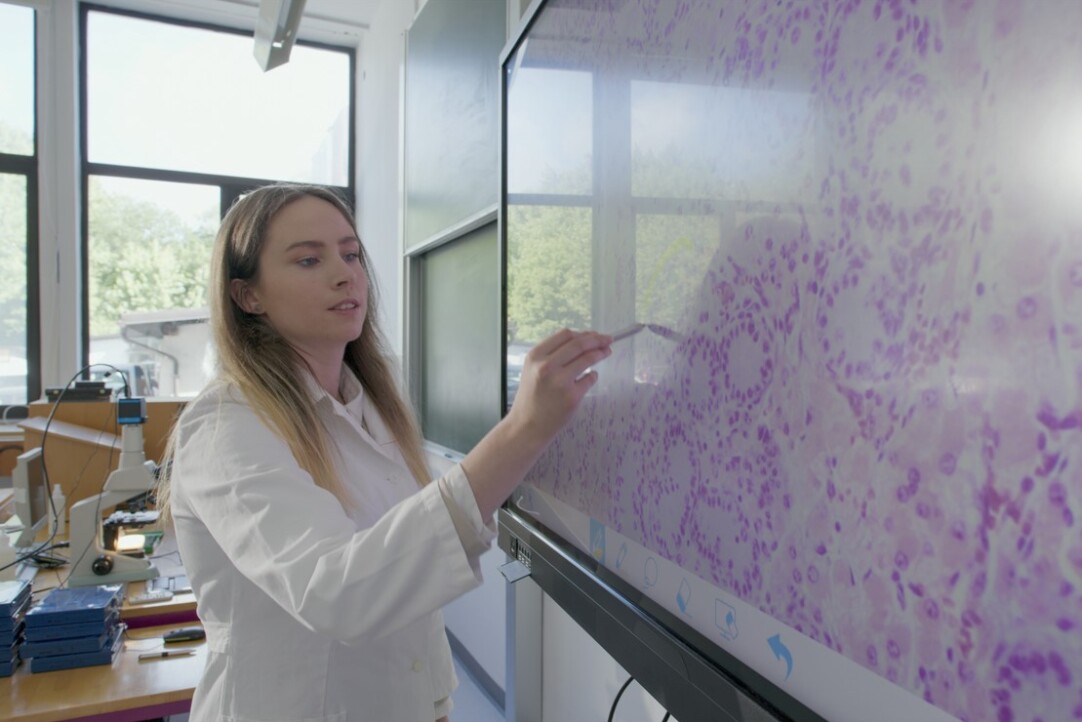
Researchers at HSE ISSEK have analysed the level of trust in scientific knowledge in Russian society and the factors shaping attitudes and perceptions. It was found that trust in science depends more on everyday experience, social expectations, and the perceived promises of science than on objective knowledge. The article has been published in Universe of Russia.
Scientists Uncover Why Consumers Are Reluctant to Pay for Sugar-Free Products
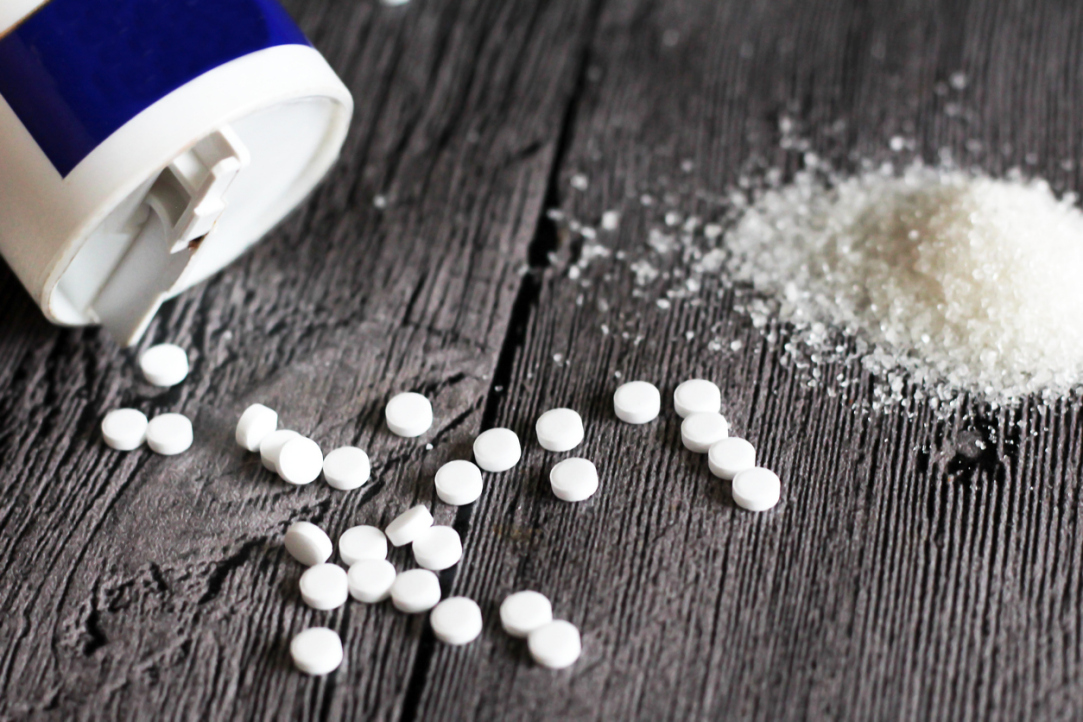
Researchers at the HSE Institute for Cognitive Neuroscience have investigated how 'sugar-free' labelling affects consumers’ willingness to pay for such products. It was found that the label has little impact on the products’ appeal due to a trade-off between sweetness and healthiness: on the one hand, the label can deter consumers by implying an inferior taste, while on the other, it signals potential health benefits. The study findings have been published in Frontiers in Nutrition.

HSE Scientists Optimise Training of Generative Flow Networks
Researchers at the HSE Faculty of Computer Science have optimised the training method for generative flow neural networks to handle unstructured tasks, which could make the search for new drugs more efficient. The results of their work were presented at ICLR 2025, one of the world’s leading conferences on machine learning. The paper is available at Arxiv.org.

Physicists Propose New Mechanism to Enhance Superconductivity with 'Quantum Glue'
A team of researchers, including scientists from HSE MIEM, has demonstrated that defects in a material can enhance, rather than hinder, superconductivity. This occurs through interaction between defective and cleaner regions, which creates a 'quantum glue'—a uniform component that binds distinct superconducting regions into a single network. Calculations confirm that this mechanism could aid in developing superconductors that operate at higher temperatures. The study has been published in Communications Physics.

Neural Network Trained to Predict Crises in Russian Stock Market
Economists from HSE University have developed a neural network model that can predict the onset of a short-term stock market crisis with over 83% accuracy, one day in advance. The model performs well even on complex, imbalanced data and incorporates not only economic indicators but also investor sentiment. The paper by Tamara Teplova, Maksim Fayzulin, and Aleksei Kurkin from the Centre for Financial Research and Data Analytics at the HSE Faculty of Economic Sciences has been published in Socio-Economic Planning Sciences.

Larger Groups of Students Use AI More Effectively in Learning
Researchers at the Institute of Education and the Faculty of Economic Sciences at HSE University have studied what factors determine the success of student group projects when they are completed with the help of artificial intelligence (AI). Their findings suggest that, in addition to the knowledge level of the team members, the size of the group also plays a significant role—the larger it is, the more efficient the process becomes. The study was published in Innovations in Education and Teaching International.

New Models for Studying Diseases: From Petri Dishes to Organs-on-a-Chip
Biologists from HSE University, in collaboration with researchers from the Kulakov National Medical Research Centre for Obstetrics, Gynecology, and Perinatology, have used advanced microfluidic technologies to study preeclampsia—one of the most dangerous pregnancy complications, posing serious risks to the life and health of both mother and child. In a paper published in BioChip Journal, the researchers review modern cellular models—including advanced placenta-on-a-chip technologies—that offer deeper insights into the mechanisms of the disorder and support the development of effective treatments.

Physicists at HSE University Reveal How Vortices Behave in Two-Dimensional Turbulence
Researchers from the Landau Institute for Theoretical Physics of the Russian Academy of Sciences and the HSE University's Faculty of Physics have discovered how external forces affect the behaviour of turbulent flows. The scientists showed that even a small external torque can stabilise the system and extend the lifetime of large vortices. These findings may improve the accuracy of models of atmospheric and oceanic circulation. The paper has been published in Physics of Fluids.
.jpg "Solvent Instead of Toxic Reagents: Chemists Develop Environmentally Friendly Method for Synthesising Aniline Derivatives")
Solvent Instead of Toxic Reagents: Chemists Develop Environmentally Friendly Method for Synthesising Aniline Derivatives
An international team of researchers, including chemists from HSE University and the A.N. Nesmeyanov Institute of Organoelement Compounds of the Russian Academy of Sciences (INEOS RAS), has developed a new method for synthesising aniline derivatives—compounds widely used in the production of medicines, dyes, and electronic materials. Instead of relying on toxic and expensive reagents, they proposed using tetrahydrofuran, which can be derived from renewable raw materials. The reaction was carried out in the presence of readily available cobalt salts and syngas. This approach reduces hazardous waste and simplifies the production process, making it more environmentally friendly. The study has been published in ChemSusChem.
Deadline for submitting applications is November 7, 2025