

Master’s Programme in Comparative Social Research Now Offers a Double Degree Option
HSE has signed an agreement for a double degree programme with the Free University of Berlin in Germany. The agreement encompasses the Master's programme in Comparative Social Research and its German counterpart will be the ‘East European Studies’ programme.
Survival Strategies for Women in a Youth-centric World
The idea of ageing well assumes that a mature individual remains active, healthy, and attractive. Society places this demand on women in particular. HSE researchers have published an article in Ageing & Society that looks at the strategies women over 50 choose.

Suspicious Other
In many countries, human empowerment – including freedom of expression and action – tends to increase people’s generalised trust in other people, particularly strangers. However, such an increase is usually gradual, reaching its peak in affluent, modernised democracies. In contrast, in countries with below-average levels of development, people, especially educated ones, often demonstrate a lack of trust in strangers, according to HSE researchers.
International Sociology Seminar Focuses on Social Movements
On October 19, the HSE School of Sociology hosted Dr. Kerstin Jacobsson, Professor of Sociology at the University of Gothenburg (Sweden), for a seminar entitled ‘Emotions and Morality in a neo-Durkheimian Perspective on Social Movements’. Held as part of the International Sociology Seminar Series, Dr. Jacobsson’s talk was based on the book Animal Rights Activism: A Moral-Sociological Perspective on Social Movements (co-authored with Jonas Lindblom), which develops a novel theoretical perspective on social movements. Following her lecture, she spoke with the HSE News Service about some of the key findings in her research on social movements, including as they relate to the post-Soviet space.

Artificial Intelligence Society
Cultural Evolution, a new book by Ronald Inglehart, American sociologist, professor at the University of Michigan and academic supervisor of the HSE Laboratory for Comparative Social Research, is currently being prepared for publication in Russia. Russian readers will be the first to read the prominent scholar's book, as its Russian translation will come out before the American original. The Russian translation of the book has been prepared by the Liberal Mission Foundation and the LCSR.

Victims Rather Than Enemies
A series of in-depth interviews conducted by HSE researchers reveal what young residents of Dagestan think of their peers who have joined ISIL. The latter tend to be perceived as victims of brainwashing and unresolved social problems rather than enemies, the study shows.

When Russian Teenagers Start Drinking
High school students intending to pursue vocational education consume alcohol more often than their peers who are planning to go to universities. These findings come from a survey of 1,000 Russian high school students that was carried out as part of a joint research project by scholars from HSE and New York University.

How Women Perpetuate Gender Stereotypes
In a conservative society, women as well as men tend to hold sexist attitudes towards other women, treating them with disrespect and criticising them either for being too feminine and sexual or for taking on traditionally 'male' roles. This type of gender bias assumes a limited range of 'female' roles in society. Misogyny and distrust of women's abilities can generate a fear of femininity, according to Olga Savinskaya and Elizaveta Zakharova's paper Using Mixed Methods to Study Internalised Misogyny among Millennial Women.
-%D0%BC%D1%83%D0%B6%D1%87%D0%B8%D0%BD%D0%B0%20%D0%BC%D0%BE%D0%B5%D1%82%20%D0%BF%D0%BE%D0%B4%20%D0%BA%D1%80%D0%BE%D0%B2%D0%B0%D1%82%D1%8C%D1%8E.jpg "Who is the Head of the Household?")
Who is the Head of the Household?
In Russia, self-estimates of time spent doing housework stand at five hours a day for women and slightly more than three hours a day for men.Men's involvement in household chores is relatively low, but Russian society finds this fair, according to Svetlana Biryukova, Alla Makarentseva and Ekaterina Tretyakova's study 'Perceptions of Time Spent on Housework among Men and Women'.
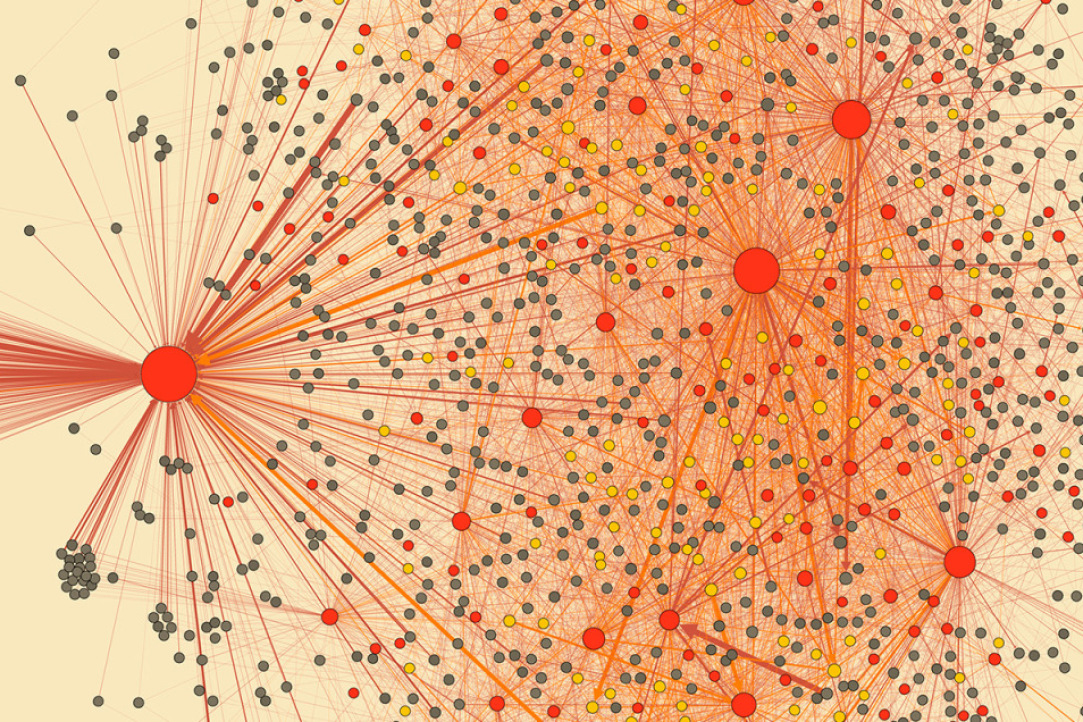
Social Scientists Reveal Structure of AIDS Denialist Online Communities
HSE researchers examined the structure of online communities of Russian AIDS denialists – people who deny the reality of HIV and AIDS – and the manner in which they spread their ideas. The findings are published in American Behavioral Scientist.