

A Space for Economic Experimentation: LEEF Organises Workshop for Early-Career Researchers
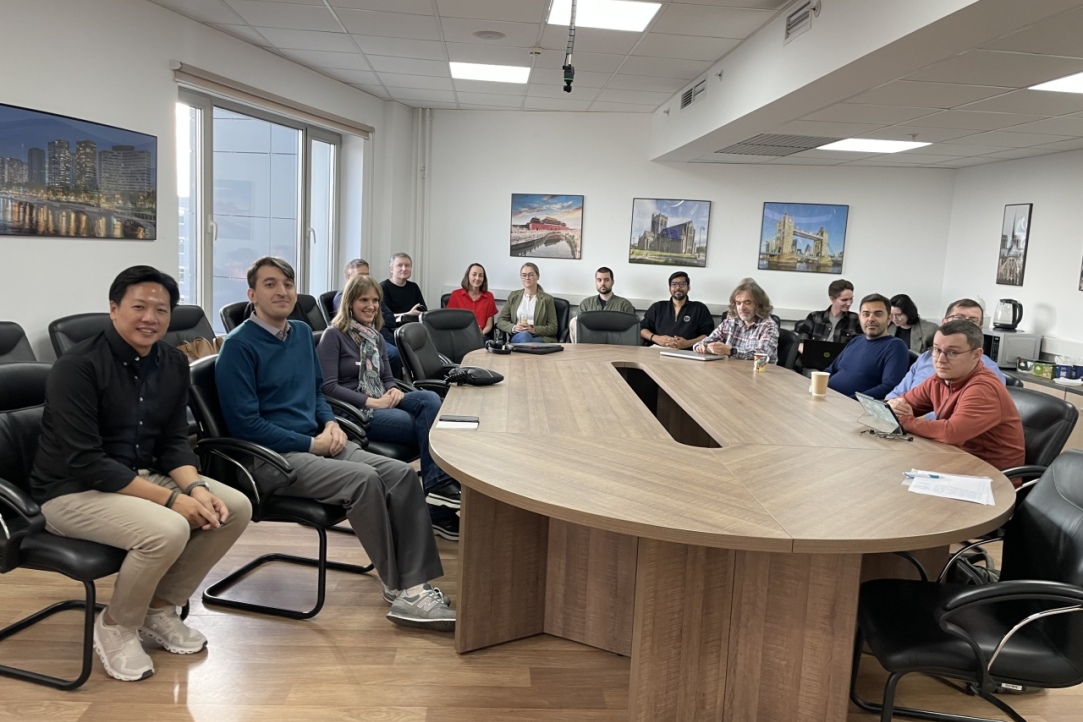
In early September 2025, the renewed Laboratory for Experimental Economics and Finance (LEEF) held its first workshop for early-career researchers. Its main distinguishing feature was that every presentation was based on the results of laboratory economic experiments. In particular, the speakers discussed what people consider a fair deal, how best to motivate employees, and how genes influence the willingness to cooperate and help others. All interested students and postgraduates were invited to collaborate with the laboratory.
The Laboratory for Experimental Economics and Finance (LEEF) traces its history back to a unit established by lecturers and students in 2009. This academic year marked a kind of relaunch for the laboratory: it joined the HSE Faculty of Economic Sciences and is now headed by Assistant Professor at the HSE International College of Economics and Finance Alexander Usvitskiy.
The laboratory’s main goal is to study situations in which the actual behaviour of economic agents differs from what theory predicts. Researchers examine a wide range of such cases—for example, how people act in financial markets (including cryptocurrency markets), in conditions of uncertainty and risk, or in situations of competition and cooperation. What unites these studies is a common methodological framework. The key feature of all the research is reliance on laboratory experiments, which make it possible to observe how people actually behave in different situations and what factors influence their decisions.
There is a serious shortage of specialists in behavioural and experimental economics in Russia. To attract early-career researchers, the laboratory organised its first workshop on September 12, 2025. The event brought together postgraduates and lecturers from the HSE Faculty of Economic Sciences and International College of Economics and Finance, as well as experts from leading foreign universities such as McGill University and the University of Macau.
The speakers presented papers on various aspects of human interaction—both in competitive and strategic situations and in cooperative ones. They discussed classic models of competition and issues of trust, as well as interdisciplinary topics at the intersection of behavioural economics and genetics. A distinguishing feature of every presentation was its reliance on the results of high-level international laboratory experiments.
LEEF Research Fellow Ying Wang delivered a presentation on the design of feedback mechanisms in the workplace. The study addressed a classic problem—how to find the most effective combination of informational and financial incentives to maintain employee productivity. To test the hypothesis, an experiment was conducted in the form of a ‘gold mining’ game. Participants ‘worked’ for 16 consecutive days in a simulated environment with a given probability of discovering a gold mine and extracting nuggets, while access to information about results could be regulated. Sometimes participants could see all their outcomes; at other times, they saw nothing. The reward could either remain the same each day or decrease as the end of the game approached. It turned out that it is better not to provide participants with additional information immediately but to reveal it closer to the deadline, while gradually reducing the reward. Under these conditions, workers tended to work longer and produce results that were more optimal from the principal’s point of view.

Yi Shi
Research Fellow Yi Shi’s presentation focused on what economists call conditional cooperation—in other words, ‘I will help you if you help me.’ The researcher set out to determine whether this kind of cooperation is a response to a partner’s actions or depends on underlying social preferences such as altruism. An experiment involving 150 participants was conducted at a University of Essex laboratory. It was based on the classic prisoner’s dilemma, in which each player’s payoff depends both on their own actions and on those of another person. Players could choose either to cooperate or to betray. However, unlike the classic version of the game, in which both players act simultaneously, this experiment was sequential: the first player made a move, and the second responded. To better understand participants’ motives, another version of the game was tested in which the second player’s responses were pre-set—for instance, to cooperate if the first player also cooperated. The participant then had to state what they would do in each situation. The results showed that people tend to respond to cooperation with cooperation. However, when the second player stood to gain significantly more by betraying, they almost always chose that option.
Head of the Laboratory for Experimental Economics and Finance Alexander Usvitskiy presented a study conducted jointly with HSE Department of Theoretical Economics researchers Anastasia Antsygina, Mariya Teteryatnikova, and James Tremewan. The model explored competition between two technology firms, each of which could seek support—that is, use connections with suppliers, policymakers, colleagues, and other agents. Such support increased the firm’s chances of success but required the supporter to claim a share of the prize in case of victory. In the experiment, 216 participants played 50 rounds under different configurations. The study employed an innovative method for simulating negotiations in a laboratory environment: after choosing their support configuration, players decided how much effort to invest to win the competition. Economic theory predicted that the support configuration would vary depending on the size of the supporter’s share. However, the experiment revealed that participants most often chose to back the stronger players—a strategy not always optimal from the perspective of classical theory. Moreover, those who received support tended to exert more effort to win than necessary. This effect was particularly noticeable among initially weaker players, who overestimated their chances and were motivated by the very possibility of victory when backed by supporters.

Ernan Haruvy
Ernan Haruvy from McGill University presented joint research with Matthew Walker (Newcastle University) and Timo Heinrich (Hamburg University of Technology). The team studied the phenomenon of unexpected surcharges—additional payments that arise after a deal has been struck, such as carriers demanding extra fees for unloading goods or freelancers increasing their rates after a project has been agreed upon. In the experiments, participants were presented with two scenarios. The first involved classic Bertrand competition, where two players bid for a contract and the lowest price wins. However, after the deal was made, the winner could increase the price—meaning the buyer, who expected a low cost, would face an unexpected price rise. The second scenario was based on the ultimatum game, where the seller stated the final price upfront, including the surcharge. The buyer could either accept the terms or walk away. The findings showed that people react negatively to such situations, and the higher the initial price, the more sharply they resent new demands. The most distressing situation was when the ‘rules of the game’ changed midway—this made buyers feel deceived. The research demonstrated that people value fairness and are willing to pay more for transparent and predictable arrangements.

Lawrence Choo
The most interdisciplinary presentation came from Lawrence Choo of the University of Macau, prepared in collaboration with biologists Soo Hong Chew, Richard P. Ebstein, and Yunfeng Lu. The researchers conducted a classic public goods game with over a thousand students. Blood samples were then taken and participants’ genotypes were compared with their behaviour in the game. It was found that carriers of a specific variant of the DRD4 gene were more likely to act cooperatively. The effect remained robust even after accounting for cultural differences. For example, it was stronger in regions of China where agriculture depended on rice cultivation and therefore required collective labour. The authors suggested that this may be evidence of a process of co-evolution between culture and genes.
All the presentations sparked lively discussions among participants, who debated both the theoretical frameworks and the experimental results themselves.
The workshop was only the first event for early-career researchers. The laboratory plans to hold many more conferences, workshops and other events to further develop the field of behavioural economics in Russia.
Alexander Usvitskiy
As Alexander Usvitskiy emphasised, any student, postgraduate, or researcher with an interesting idea in the field of behavioural economics can collaborate with the laboratory. Moreover, the laboratory welcomes cooperation with those who are already working on theoretical research projects—such as final qualification papers or dissertations—that could be enhanced with empirical data.
‘The Laboratory for Experimental Economics and Finance is one of the few places in Russia that specialises specifically in behavioural economics and offers all the necessary conditions for conducting economic experiments—including those that, for various reasons, cannot be carried out in other Russian cities,’ said the researcher. ‘The unique value of laboratory experiments lies in their ability to establish cause-and-effect relationships and deepen our fundamental understanding of human behaviour. Moreover, experiments have strong practical relevance, as they serve as models for refining mechanisms that can later be applied in the real world. We hope that our events for early-career researchers will contribute to the development of behavioural economics in Russia and attract interested scholars to collaborate with us or apply to our doctoral programme—and that students will take part in our experiments.’
Those interested in the work of the Laboratory for Experimental Economics and Finance and wishing to take part in economic experiments can register here.
See also:

HSE Psycholinguists Launch Digital Tool to Spot Dyslexia in Children
Specialists from HSE University's Centre for Language and Brain have introduced LexiMetr, a new digital tool for diagnosing dyslexia in primary school students. This is the first standardised application in Russia that enables fast and reliable assessment of children’s reading skills to identify dyslexia or the risk of developing it. The application is available on the RuStore platform and runs on Android tablets.
Neural Network Trained to Predict Crises in Russian Stock Market
Economists from HSE University have developed a neural network model that can predict the onset of a short-term stock market crisis with over 83% accuracy, one day in advance. The model performs well even on complex, imbalanced data and incorporates not only economic indicators but also investor sentiment. The paper by Tamara Teplova, Maksim Fayzulin, and Aleksei Kurkin from the Centre for Financial Research and Data Analytics at the HSE Faculty of Economic Sciences has been published in Socio-Economic Planning Sciences.
Mistakes That Explain Everything: Scientists Discuss the Future of Psycholinguistics
Today, global linguistics is undergoing a ‘multilingual revolution.’ The era of English-language dominance in the cognitive sciences is drawing to a close as researchers increasingly turn their attention to the diversity of world languages. Moreover, multilingualism is shifting from an exotic phenomenon to the norm—a change that is transforming our understanding of human cognitive abilities. The future of experimental linguistics was the focus of a recent discussion at HSE University.
Larger Groups of Students Use AI More Effectively in Learning
Researchers at the Institute of Education and the Faculty of Economic Sciences at HSE University have studied what factors determine the success of student group projects when they are completed with the help of artificial intelligence (AI). Their findings suggest that, in addition to the knowledge level of the team members, the size of the group also plays a significant role—the larger it is, the more efficient the process becomes. The study was published in Innovations in Education and Teaching International.
New Models for Studying Diseases: From Petri Dishes to Organs-on-a-Chip
Biologists from HSE University, in collaboration with researchers from the Kulakov National Medical Research Centre for Obstetrics, Gynecology, and Perinatology, have used advanced microfluidic technologies to study preeclampsia—one of the most dangerous pregnancy complications, posing serious risks to the life and health of both mother and child. In a paper published in BioChip Journal, the researchers review modern cellular models—including advanced placenta-on-a-chip technologies—that offer deeper insights into the mechanisms of the disorder and support the development of effective treatments.
Advancing Personalised Therapy for More Effective Cancer Treatment
Researchers from the International Laboratory of Microphysiological Systems at HSE University's Faculty of Biology and Biotechnology are developing methods to reduce tumour cell resistance to drugs and to create more effective, personalised cancer treatments. In this interview with the HSE News Service, Diana Maltseva, Head of the Laboratory, talks about their work.
‘Our Task Is to Promote and Popularise Native Languages’
The Centre for the Study of Native Languages at Dagestan State University (DSU) is actively engaged in researching the many languages spoken by the peoples of Dagestan. The republic has 14 official state languages, many of which have their own dialects and varieties. Scholars from Dagestan plan to adopt corpus-based methods of linguistic research used at HSE University and intend to collaborate with HSE’s Linguistic Convergence Laboratory. The HSE News Service spoke with the centre’s Director, Prof. Marina Gasanova, who is currently undertaking a research placement at HSE University.
Designing an Accurate Reading Skills Test: Why Parallel Texts are Important in Dyslexia Diagnosis
Researchers from the HSE Centre for Language and Brain have developed a tool for accurately assessing reading skills in adults with reading impairments. It can be used, for instance, before and after sessions with a language therapist. The tool includes two texts that differ in content but are equal in complexity: participants were observed to read them at the same speed, make a similar number of errors, and understand the content to the same degree. Such parallel texts will enable more accurate diagnosis of dyslexia and better monitoring of the effectiveness of interventions aimed at addressing it. The paper has been published in Educational Studies.
HSE Researchers Determine Frequency of Genetic Mutations in People with Pulmonary Hypertension
For the first time in Russia, a team of scientists and clinicians has conducted a large-scale genetic study of patients with pulmonary arterial hypertension. The team, which included researchers from the International Laboratory of Bioinformatics at the HSE Faculty of Computer Science, analysed the genomes of over a hundred patients and found that approximately one in ten carried pathogenic mutations in the BMPR2 gene, which is responsible for vascular growth. Three of these mutations were described for the first time. The study has been published in Respiratory Research.
Similar Comprehension, Different Reading: How Native Language Affects Reading in English as a Second Language
Researchers from the MECO international project, including experts from the HSE Centre for Language and Brain, have developed a tool for analysing data on English text reading by native speakers of more than 19 languages. In a large-scale experiment involving over 1,200 people, researchers recorded participants’ eye movements as they silently read the same English texts and then assessed their level of comprehension. The results showed that even when comprehension levels were the same, the reading process—such as gaze fixations, rereading, and word skipping—varied depending on the reader's native language and their English proficiency. The study has been published in Studies in Second Language Acquisition.