

‘Our Task Is to Promote and Popularise Native Languages’
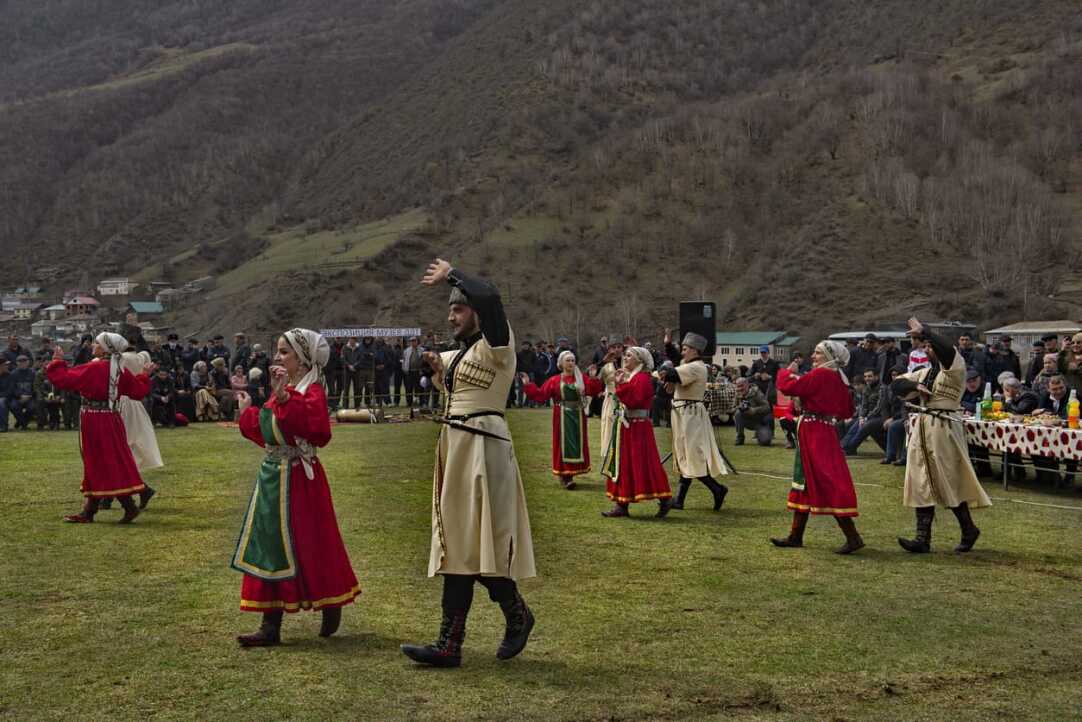
The Centre for the Study of Native Languages at Dagestan State University (DSU) is actively engaged in researching the many languages spoken by the peoples of Dagestan. The republic has 14 official state languages, many of which have their own dialects and varieties. Scholars from Dagestan plan to adopt corpus-based methods of linguistic research used at HSE University and intend to collaborate with HSE’s Linguistic Convergence Laboratory. The HSE News Service spoke with the centre’s Director, Prof. Marina Gasanova, who is currently undertaking a research placement at HSE University.
— How was the Centre for the Study of Native Languages at Dagestan State University established?
— The centre was founded in December 2016 at the initiative of the Ministry for National Policy and Religious Affairs of the Republic of Dagestan. Following a series of discussions, it was decided that the centre would be based at the Faculty of Philology at DSU.
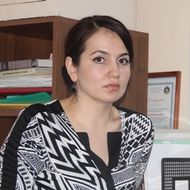
Marina Gasanova
— Why was the decision made to create the centre at that particular time?
— Most likely, this was largely due to the fact that the Minister at the time was Tatyana Gamaley, who had long worked at the Faculty of Philology and took a deep interest in the development and preservation of native languages. In Dagestan, issues concerning native and national languages have always received great attention, since it is difficult to find another place where so many peoples speaking dozens of different languages live in such a small area. This diversity also creates certain challenges, which is why other organisations and foundations dedicated to native languages operate in Dagestan as well. There is a clear public demand for the preservation and development of native languages.
— More than 100 ethnic groups live in Dagestan, representing three religions. How do you maintain a balance between studying the languages of the largest groups—Avar, Dargin, Kumyk and Lezgin—and those of smaller communities?
— Dagestan has 14 state languages, including Russian, and 18 unwritten ones. However, determining the exact number of languages is difficult, as no law on languages has yet been adopted. There are dialects and varieties of official languages that claim the status of independent ones. For us linguists, the key task is not so much to count the languages as to document and preserve ethno-linguistic diversity. At our сentre we pay special attention to unwritten languages—they are the most vulnerable, as they receive no state support. Teaching and promoting the state languages also presents certain challenges: because of the great diversity, there is still no complete set of school textbooks in native languages. The problems are being addressed, and textbooks are published at the expense of the republic’s budget, but the process is slower than we would like.
— What is the situation with unwritten languages?
— They are studied only by linguists and language activists, but they are not in the public spotlight. So far, efforts by the Karatin people, who live in several villages in the Akhvakhsky District in the west of the republic, and by the Didoi people to obtain a writing system have been unsuccessful. One of the centre’s aims is to assist such activists. For instance, we published a collection of Karatin folk tales—a unique project carried out in cooperation with Karata Free Society. Children collected legends and stories from their grandparents; we translated them into Russian and presented the published books to the children. They take a special interest and pride in such projects. We have also released a trilingual collection of children’s stories, Ryzhik, in Russian, Tsakhur, and Rutul. The latter two are spoken by small communities and are even listed in the Red Book of the Languages of Russia, which records languages under threat of extinction. About half of Dagestan’s languages are included in this list. Our task is to do something tangible for these vulnerable languages. The children illustrated the stories, and we published the books featuring their best drawings, which were then distributed to schools where minority languages are taught.
When children and young people take part in such work, they begin to realise just how important and meaningful it is to learn and know their native language.
— What are the centre’s main areas of activity?
— Our principal goal is the promotion and popularisation of languages, so we carry out extensive educational and outreach work. We have organised an ethnocultural evening project for schoolchildren titled ‘The Fate of a Language Is the Fate of a People,’ in which pupils took an active part. We were also co-organisers of Total Dictation events held in native languages.
Another important direction is educational and methodological work, including the organisation of annual workshops for teachers. They guide us themselves, raising the issues they consider most pressing. Together with teachers, the centre has developed pilot teaching aids for the Avar and Dargin languages and on methods of teaching foreign languages. At present, the teaching of native languages is often overly complex and grammar-focused, while there are few resources for conversational practice. We therefore produced textbooks, workbooks and an audio CD for articulation exercises, aligning the materials with school curricula so that teachers can use them in lessons.
I even tried using one of these textbooks myself—to see whether an adult could read, listen and learn one of the languages independently, which was one of our aims.
— And did it work?
— Yes. I would also highlight our research activities. For example, the centre implemented a major project funded by the Russian Humanitarian Science Foundation: The Paremiological Worldview of Dagestan’s Small Ethnic Groups. We collected over 11,000 proverbs, sayings, curses, and blessings in Tsakhur, Agul, Rutul, Archi, and other languages. The project won the Key Word Award from the Federal Agency for Ethnic Affairs in the Best Research Project category. But that was not the end of our work. We have continued researching other Dagestani languages—for instance, we produced the first translations of Lak and Tsakhur proverbs and sayings. We have also compiled a series of linguocultural dictionaries on various cultural codes, which include paremiological material from 13 to 15 languages.
We also took part in a project by the Ministry of Education of the Russian Federation, ‘Large-Scale Information and Promotional Support and Development of the Russian Language in the Multilingual and Multicultural Environment of the Republic of Dagestan.’ Russian varies across regions, and in this project we studied its Dagestani variety.
At the same time, we are involved in interdisciplinary projects. For example, the project ‘Anthropology of the Dagestani City: The Impact of Globalisation on the Transformation of Urban Culture and Everyday Life in Post-Soviet Dagestan’ examined the toponymy of Dagestani towns—the names of streets and districts, and their etymology.
I would also highlight our publishing activities. I want to emphasise that we have published over 30 books, which is significant. My native language is Tabasaran, and I understand how vital it is to document the state of our languages, since each year the number of high-quality informants declines, as the younger generation generally has a weaker command of their native tongues.
We have developed several publishing series. For instance, we managed to publish phrasebooks in five languages: Tabasaran, Agul, Lezgin, Karatin, and Kubachi (the last two are unwritten languages). This is important for understanding and learning these languages, especially the less widely spoken ones. The status of the Kubachi language is disputed, but for us it is essential to record linguistic diversity. The phrasebooks are intended for a broad audience, so that they can be used not only by native speakers.
Our children’s series is especially beloved: children’s literature in native languages is crucial so that from their earliest years children can hear and read in their own languages
There are Kumyk poems, Agul fairy tales, and a Tabasaran alphabet in verse. When the centre launched children’s projects, we made sure that the texts in national languages were accompanied by Russian translations. This widens the readership and, for those who are not yet fluent in their native language, helps them learn it.
Most of the books were published with the support of the republic’s Ministry for National Policy. Unfortunately, the print runs are small, and we have distributed most copies to schools and libraries. To make our publications more accessible, we also make them freely available in digital form on the centre’s website and Telegram channel.
— Who would you describe as the centre’s main audience?
— It is a very broad one. We have colleagues who wish to publish their work, and when they bring us ready manuscripts, we help them prepare them for publication. At the same time, the centre seeks to respond to the needs of teachers who wish to teach and of schoolchildren who wish to learn their native languages. The key mission of our centre is promotion and education. Our audience includes many listeners, viewers, and readers—from scholars to children and adults interested in their native tongue.
— What sort of relationship do you have with religious figures?
— When we work on the promotion, preservation, and development of native languages and explain why it is important for families and young people to speak them, we reach out to religious leaders—to imams—asking them to draw attention in their sermons to the importance of native languages and to deliver sermons in these languages. We always find understanding and support from them.
— How actively are students from DSU and other universities in the republic involved in the centre’s work?
— One of the centre’s priorities is to engage young people in outreach and educational activities, which is why much of this work is carried out at DSU. Students from our university, from the Faculty of Dagestani Philology at Dagestan State Pedagogical University, and from other institutions work with schoolchildren and pre-schoolers. They show great enthusiasm for their native languages and talk about them in schools and kindergartens, taking an active part in all our projects.
— What attracted you, as an experienced lecturer, to undertake an internship at HSE University?
— Any teacher should not only teach but also learn. When I was offered an internship, I immediately set my sights on the HSE Linguistic Convergence Laboratory.
— Why did you choose that particular laboratory?
— When the laboratory was still headed by Nina Dobrushina, they approached us for expert advice on their projects concerning the languages of the peoples of Dagestan, and now they are actively working on Caucasian languages.
We do not yet have expertise in computational and corpus linguistic methods, and my purpose in applying for the internship was precisely to gain these skills. I am now working with the typological atlas of Dagestani languages and, at the same time, familiarising myself with software that will help me in my work. For instance, I plan to create a corpus of my native Tabasaran language.
— What are your impressions of HSE University and of the work done in the laboratory?
— They are very inspiring. The laboratory is full of life—there is constant activity, discussion and dialogue. It is a community of people who are truly passionate about their work. Their energy is infectious. The internship has been very productive and has taken place in a warm, friendly atmosphere. I am grateful to George Moroz, who responded to my proposal for an internship, and to the young members of the laboratory—Chiara Naccarato, Elena Shvedova, Konstantin Filatov, and Alina Russkih—for helping me master new technologies.
— What experience would you describe as the most valuable?
— Gaining hands-on experience and mastering computational and corpus linguistic methods—skills I had previously lacked. I can now apply them in my own work and teach my colleagues how to use them.
— Do you plan to establish closer cooperation between your centre and HSE University, and to carry out joint projects?
— We have developed good relations with George Moroz, Head of the HSE Linguistic Convergence Laboratory, and we already have plans for further collaboration. I believe it will be both productive and mutually beneficial. We can continue our joint work on the typological atlas and on the corpus of the Tabasaran language.
The laboratory’s researchers visit Dagestan every year. We can help them by providing informants for any of the local languages, by organising field expeditions, and by supplying linguistic materials. For us, in turn, the technologies of digitalisation and language processing are of great importance.
See also:

HSE Psycholinguists Launch Digital Tool to Spot Dyslexia in Children
Specialists from HSE University's Centre for Language and Brain have introduced LexiMetr, a new digital tool for diagnosing dyslexia in primary school students. This is the first standardised application in Russia that enables fast and reliable assessment of children’s reading skills to identify dyslexia or the risk of developing it. The application is available on the RuStore platform and runs on Android tablets.
Neural Network Trained to Predict Crises in Russian Stock Market
Economists from HSE University have developed a neural network model that can predict the onset of a short-term stock market crisis with over 83% accuracy, one day in advance. The model performs well even on complex, imbalanced data and incorporates not only economic indicators but also investor sentiment. The paper by Tamara Teplova, Maksim Fayzulin, and Aleksei Kurkin from the Centre for Financial Research and Data Analytics at the HSE Faculty of Economic Sciences has been published in Socio-Economic Planning Sciences.
Mistakes That Explain Everything: Scientists Discuss the Future of Psycholinguistics
Today, global linguistics is undergoing a ‘multilingual revolution.’ The era of English-language dominance in the cognitive sciences is drawing to a close as researchers increasingly turn their attention to the diversity of world languages. Moreover, multilingualism is shifting from an exotic phenomenon to the norm—a change that is transforming our understanding of human cognitive abilities. The future of experimental linguistics was the focus of a recent discussion at HSE University.
Larger Groups of Students Use AI More Effectively in Learning
Researchers at the Institute of Education and the Faculty of Economic Sciences at HSE University have studied what factors determine the success of student group projects when they are completed with the help of artificial intelligence (AI). Their findings suggest that, in addition to the knowledge level of the team members, the size of the group also plays a significant role—the larger it is, the more efficient the process becomes. The study was published in Innovations in Education and Teaching International.
New Models for Studying Diseases: From Petri Dishes to Organs-on-a-Chip
Biologists from HSE University, in collaboration with researchers from the Kulakov National Medical Research Centre for Obstetrics, Gynecology, and Perinatology, have used advanced microfluidic technologies to study preeclampsia—one of the most dangerous pregnancy complications, posing serious risks to the life and health of both mother and child. In a paper published in BioChip Journal, the researchers review modern cellular models—including advanced placenta-on-a-chip technologies—that offer deeper insights into the mechanisms of the disorder and support the development of effective treatments.
Advancing Personalised Therapy for More Effective Cancer Treatment
Researchers from the International Laboratory of Microphysiological Systems at HSE University's Faculty of Biology and Biotechnology are developing methods to reduce tumour cell resistance to drugs and to create more effective, personalised cancer treatments. In this interview with the HSE News Service, Diana Maltseva, Head of the Laboratory, talks about their work.
Designing an Accurate Reading Skills Test: Why Parallel Texts are Important in Dyslexia Diagnosis
Researchers from the HSE Centre for Language and Brain have developed a tool for accurately assessing reading skills in adults with reading impairments. It can be used, for instance, before and after sessions with a language therapist. The tool includes two texts that differ in content but are equal in complexity: participants were observed to read them at the same speed, make a similar number of errors, and understand the content to the same degree. Such parallel texts will enable more accurate diagnosis of dyslexia and better monitoring of the effectiveness of interventions aimed at addressing it. The paper has been published in Educational Studies.
A Space for Economic Experimentation: LEEF Organises Workshop for Early-Career Researchers
In early September 2025, the renewed Laboratory for Experimental Economics and Finance (LEEF) held its first workshop for early-career researchers. Its main distinguishing feature was that every presentation was based on the results of laboratory economic experiments. In particular, the speakers discussed what people consider a fair deal, how best to motivate employees, and how genes influence the willingness to cooperate and help others. All interested students and postgraduates were invited to collaborate with the laboratory.
HSE Researchers Determine Frequency of Genetic Mutations in People with Pulmonary Hypertension
For the first time in Russia, a team of scientists and clinicians has conducted a large-scale genetic study of patients with pulmonary arterial hypertension. The team, which included researchers from the International Laboratory of Bioinformatics at the HSE Faculty of Computer Science, analysed the genomes of over a hundred patients and found that approximately one in ten carried pathogenic mutations in the BMPR2 gene, which is responsible for vascular growth. Three of these mutations were described for the first time. The study has been published in Respiratory Research.
Similar Comprehension, Different Reading: How Native Language Affects Reading in English as a Second Language
Researchers from the MECO international project, including experts from the HSE Centre for Language and Brain, have developed a tool for analysing data on English text reading by native speakers of more than 19 languages. In a large-scale experiment involving over 1,200 people, researchers recorded participants’ eye movements as they silently read the same English texts and then assessed their level of comprehension. The results showed that even when comprehension levels were the same, the reading process—such as gaze fixations, rereading, and word skipping—varied depending on the reader's native language and their English proficiency. The study has been published in Studies in Second Language Acquisition.